What a lawn mower costs
Pricing as of July 2026, per Home Depot and Lowe's listings and LawnStarter's 2026 cost data.
Prices vary by brand, model, and region. Confirm the current price with the retailer before you buy.
As an Amazon Associate, YardBuff earns from qualifying purchases.
Cost by type
| Type | Typical price | Best for |
|---|---|---|
| Reel (manual push) | $80–$200 | Small, flat yards under ~1/4 acre; no engine, no fuel. |
| Gas push | $150–$400 | The default for a quarter- to half-acre with even ground. |
| Self-propelled | $300–$900 | Half-acre-plus, slopes, or you'd rather not push. |
| Battery / electric walk-behind | $200–$700 | Quiet, no fuel or oil; runtime capped by the battery. |
| Riding / lawn tractor | $1,500–$3,500 | Half-acre to a couple of acres of open ground. |
| Zero-turn | $3,000–$6,000 | An acre-plus with obstacles; fastest around trees and beds. |
A lawn mower costs anywhere from about $80 for a manual reel mower to $6,000 for a residential zero-turn, but most homeowners never touch either end. A gas push mower runs $150 to $400, and a self-propelled model runs $300 to $900. Those two types cut the grass for the vast majority of yards in America, and most people spend somewhere around $400.
The rest of the money question is deciding which type your yard actually needs, and then adding the fuel and upkeep the price tag never mentions. The table above breaks the six types down; here’s how to read it.
Push vs self-propelled vs riding vs zero-turn
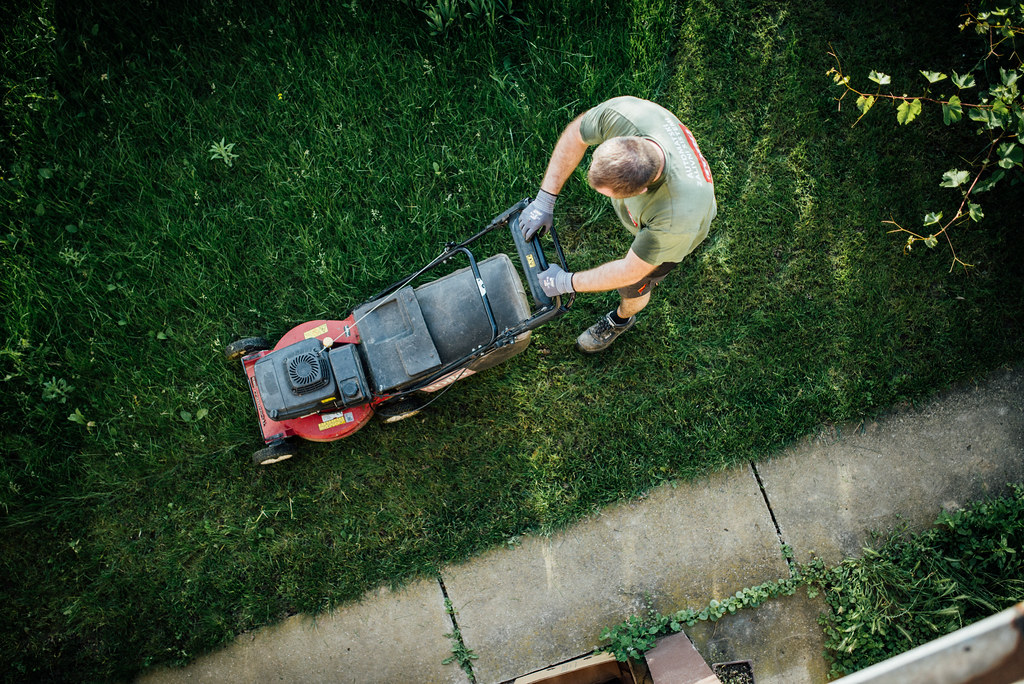
Type matters far more than brand for what you’ll pay. A reel mower has no engine, so it’s cheap and silent, but it only makes sense on a small, flat, well-kept lawn. A gas push mower is the workhorse: you provide the forward motion, the engine spins the blade, and $150 to $400 buys a machine that lasts a decade with basic care.
Self-propelled mowers add a drive system so the wheels pull the mower along. You’re paying $300 to $900 for that, and it earns its keep on slopes, on anything over half an acre, or if pushing a 70-pound machine in July isn’t your idea of a Saturday.
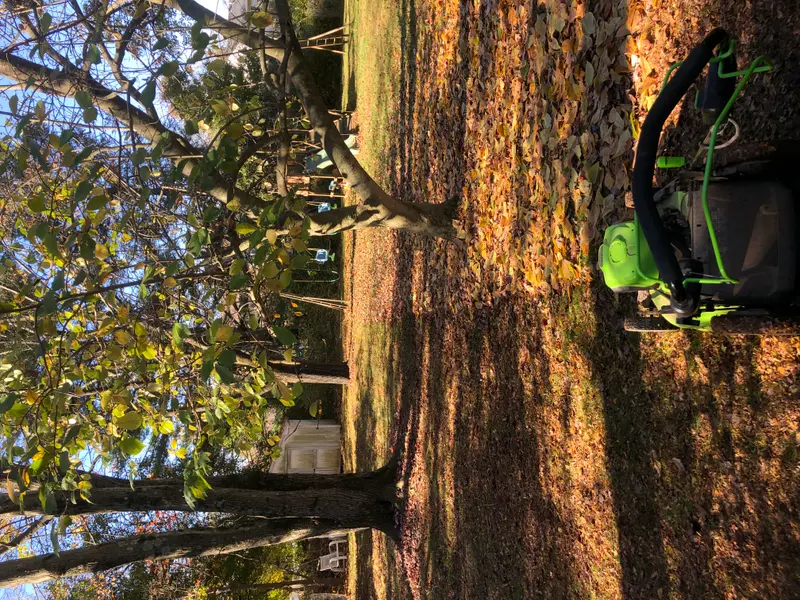
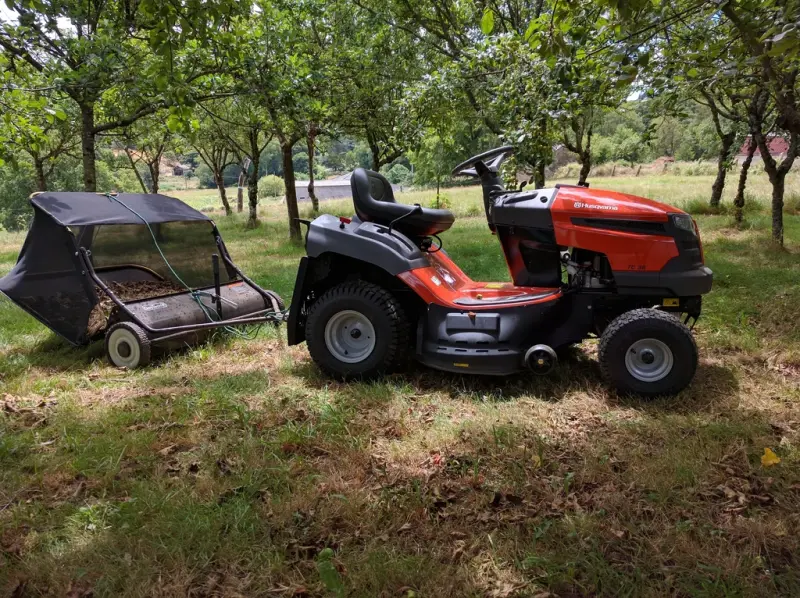
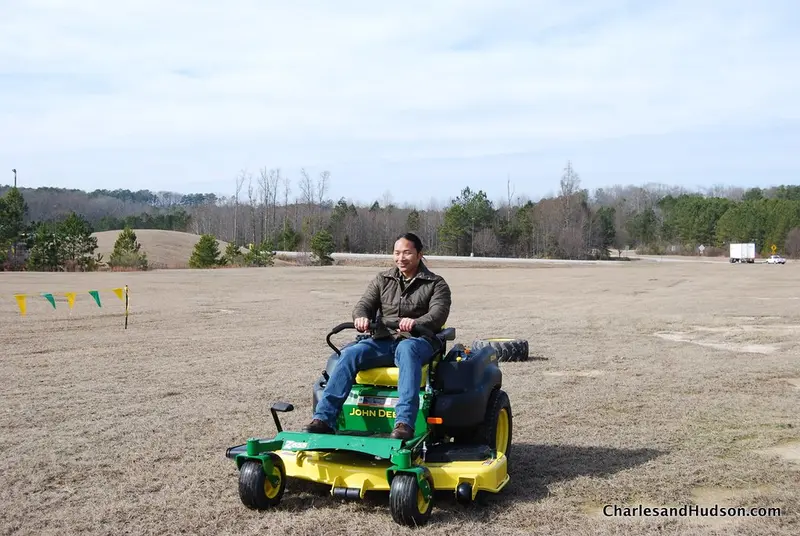
Once a yard passes roughly half an acre of open ground, walking stops making sense and you move to a seat. A riding mower or lawn tractor starts around $1,500 and runs to $3,500 for homeowner models. A zero-turn costs more, $3,000 to $6,000 for residential decks, and the money buys speed and maneuverability: it pivots on the spot, so it’s far faster around trees, beds, and fence lines than a tractor that has to loop around.
Gas vs electric: which mower is cheaper?
On the sticker, a battery walk-behind ($200 to $700) lands right between a gas push and a self-propelled. The gap isn’t the buy price; it’s what happens after.
A gas mower needs fuel, oil changes, a spark plug, an air filter, and a sharpened or replaced blade. Call it $40 to $80 a year in consumables for a typical suburban lawn. A battery mower skips all of that. You pay pennies to recharge and swap the blade occasionally, but the battery itself is the catch: expect $100 to $250 to replace it after five to seven years, and a single charge may not finish a big yard.
So the honest answer: for a small-to-medium lawn, battery is cheaper to own and far less hassle. For a large lawn or one you can’t finish on one charge, gas still wins on run time and cost per acre.
What it costs to run per year
The mower is the down payment. Over a decade, a gas walk-behind adds up to a few hundred dollars in fuel, oil, blades, plugs, and filters, plus the odd carburetor cleaning. A riding mower or zero-turn burns more fuel and takes bigger, pricier parts, so budget $150 or more a year once you’re on a seat.
Battery machines flip the math: near-zero running cost for years, then one battery replacement that can be a third of what you paid for the mower. Neither is wrong. Just know that a $250 gas mower and a $250 battery mower do not cost the same to keep running.
Which mower do I actually need?
Lot size decides this long before budget does:
- Under 1/4 acre, flat: a reel or a gas push mower. Don’t overbuy.
- 1/4 to 1/2 acre: gas push or a battery walk-behind. Self-propelled if there are slopes.
- 1/2 to 1 acre: self-propelled, or step up to a riding mower if the walk gets old.
- 1 to 2 acres: riding mower or lawn tractor.
- Over an acre with obstacles: a zero-turn earns its price in time saved.
How much should you spend?
For most quarter- to half-acre yards, a $250 to $450 mower is the right buy, gas or battery. You do not need the $900 self-propelled model for a small flat lawn, and you do not need a zero-turn until a tractor’s looping around obstacles genuinely wastes your weekend. Spend the money on the type that fits the yard, then buy the mid-tier version of that type rather than the flagship of the one below it.
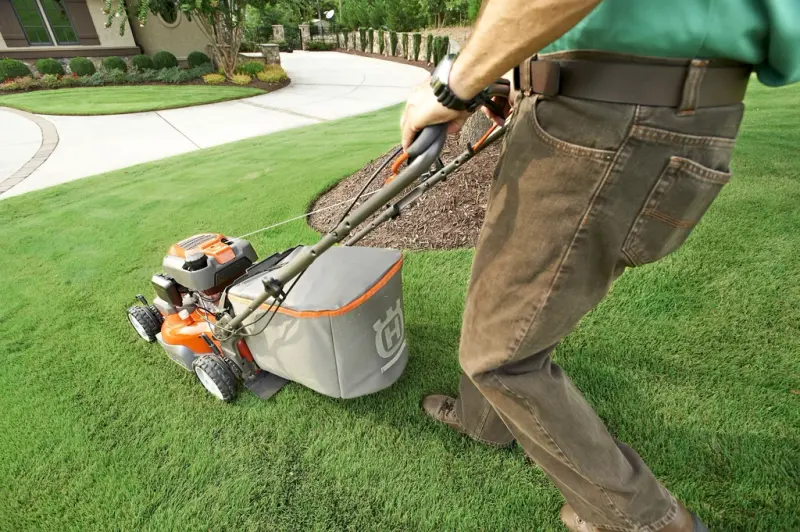
Prices move with the season and with fuel and battery costs, so treat every figure here as a current range and confirm the model you want before you buy.
Where to buy
- Gas push mowers (Honda, Toro, Craftsman) , typically $150–$400 (affiliate)
- Self-propelled mowers , typically $300–$900 (affiliate)
- Battery walk-behind mowers (EGO, Ryobi, Greenworks) , typically $250–$700 with battery (affiliate)
- Zero-turn mowers , residential models $3,000–$6,000 (affiliate)
As an Amazon Associate, YardBuff earns from qualifying purchases. Prices and availability are set by Amazon at the time you click.