What a chainsaw costs
Pricing as of July 2026, per Pro Tool Reviews and Contractors Supply 2026 data and retailer listings.
Prices vary by brand, model, and region. Confirm the current price with the retailer before you buy.
As an Amazon Associate, YardBuff earns from qualifying purchases.
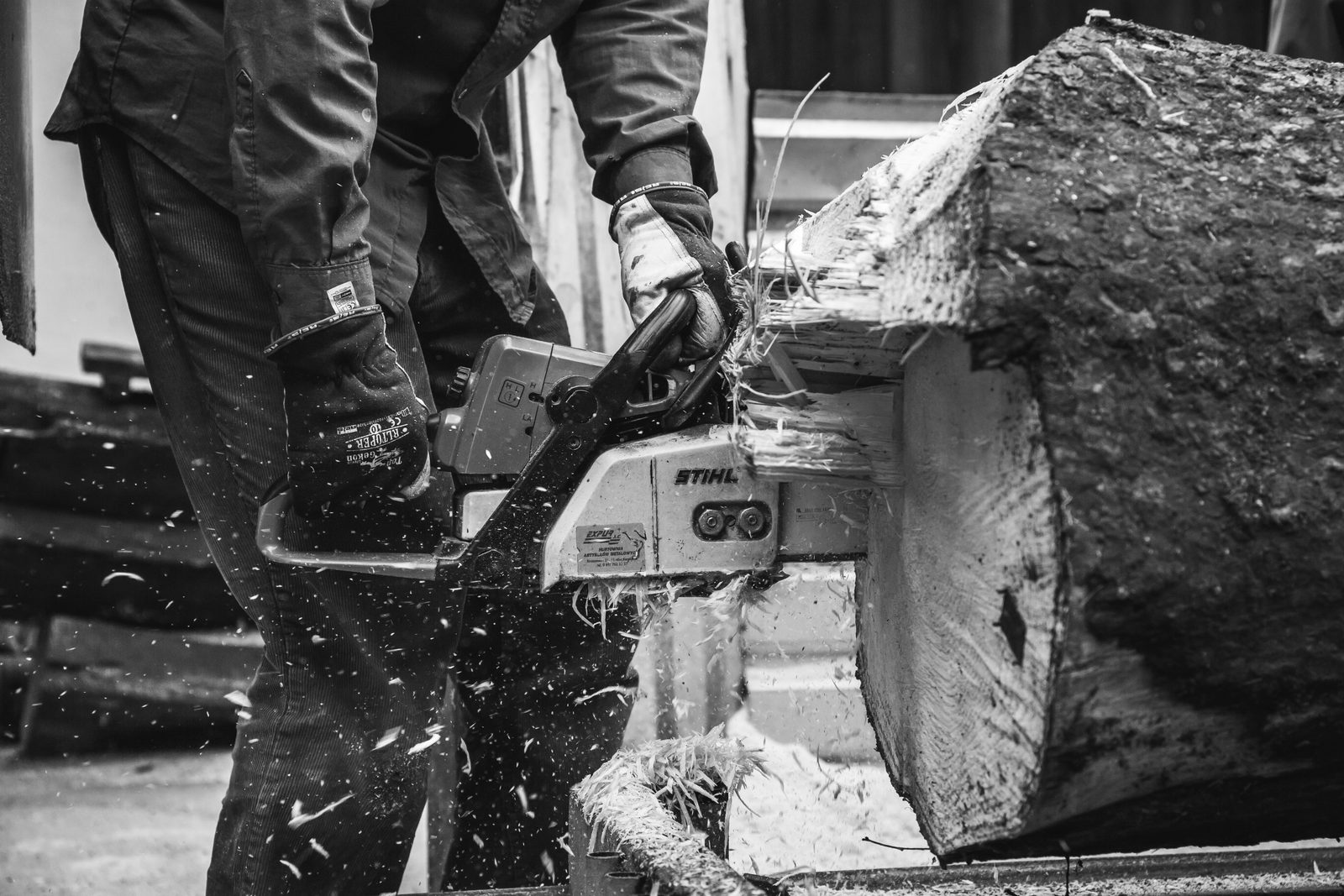
Cost by type
| Type | Typical price | Best for |
|---|---|---|
| Corded electric | $60–$200 | Light pruning near the house; needs an extension cord. |
| Battery (homeowner) | $200–$600 | Firewood, limbs, and storm cleanup; quiet, no fuel mixing. |
| Gas (homeowner) | $200–$500 | Bigger logs and off-grid work; more run time per tank. |
| Gas (prosumer / farm) | $500–$800 | Felling, bucking, and all-day cutting; bigger bar and engine. |
| Professional | $700–$1,200 | Arborist and logging use; built to run daily for years. |
A homeowner chainsaw costs $60 to $800, and most people buying one for firewood, storm cleanup, and the occasional fallen limb spend around $250. Corded electric saws start near $60, battery saws run $200 to $600, and gas homeowner saws land at $200 to $500. Only felling large trees or cutting all day pushes you toward the $700-to-$1,200 professional saws.
Bar length and power set the price far more than the brand. Here’s how to pick the tier that matches the wood you’re actually cutting.
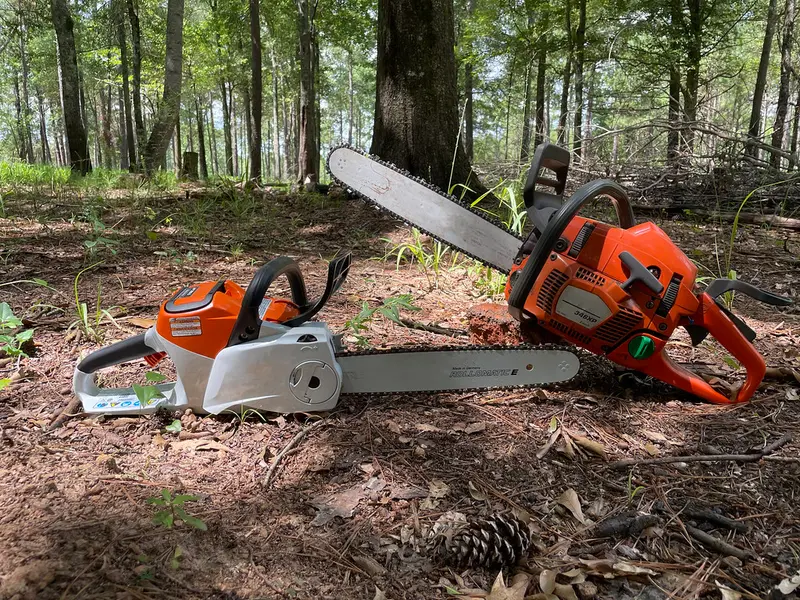
Gas vs battery vs corded
A corded electric saw is the cheapest way to cut, but the cord limits you to work near the house: pruning, small limbs, cutting a downed branch on the lawn. Fine for that, useless for anything past the driveway.
Battery saws are where most homeowners should look now. For $200 to $600 you get a saw that starts instantly, makes no fumes, needs no fuel mixing, and cuts firewood and storm debris cleanly. The limits are run time and raw power: a battery saw handles 12- to 16-inch bars and moderate logs well, but a big oak trunk will drain the pack and slow you down. If you already own a battery platform (EGO, DeWalt, Milwaukee, a Stihl AK or AP line), a bare tool is the cheapest way in.
Gas saws still win on sustained power and run time. A $200-to-$500 homeowner gas saw with an 18- to 20-inch bar bucks firewood and drops small trees all afternoon on a tank. The cost is the upkeep: a fuel-oil mix (on two-stroke saws), the pull start, and winter storage care.
What it costs to run and maintain
The saw is only the start. Every chainsaw eats bar-and-chain oil continuously while it runs, a few dollars a bottle. The chain dulls and needs sharpening or replacement; a new homeowner chain runs $15 to $30, and a good sharpening habit is the difference between a saw that cuts and one that smokes. Bars wear out too, eventually.
Gas adds fuel and, on two-stroke saws, the two-cycle oil you mix in, plus a spark plug and air filter. Skip fuel stabilizer over the winter and you’ll pay for a carburetor cleaning in spring. Battery saws skip fuel entirely; the long-term cost is a replacement pack after several years, $100 to $250.
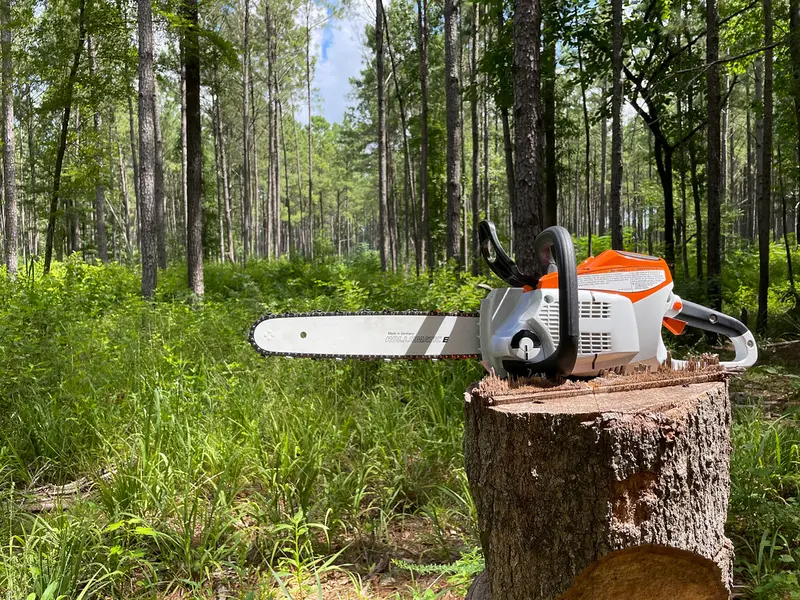
A dull chain is the most expensive mistake people make. It’s not a money cost so much as a time-and-safety cost: a sharp $250 saw outcuts a neglected $500 one every time.
Which chainsaw do I actually need?
- Pruning and small limbs near the house: corded electric or a small battery saw.
- Firewood, storm cleanup, general property work: a battery saw or a homeowner gas saw with a 16- to 18-inch bar. This covers most people.
- Felling trees, bucking big logs, all-day cutting: a prosumer gas saw with a 20-inch bar.
- Daily professional use: a pro saw built to be rebuilt.

Match the bar length to the wood, not to the aisle’s most impressive saw. A homeowner buying a 24-inch pro saw for backyard firewood has spent double for a heavier tool they’ll fight to control.
Where to buy
- Corded electric chainsaws (Worx, Oregon) , typically $60–$200 (affiliate)
- Battery chainsaws (EGO, DeWalt, Stihl AK/AP) , typically $200–$600 with battery (affiliate)
- Gas chainsaws (Echo, Husqvarna, Stihl) , typically $200–$500 homeowner grade (affiliate)
As an Amazon Associate, YardBuff earns from qualifying purchases. Prices and availability are set by Amazon at the time you click.